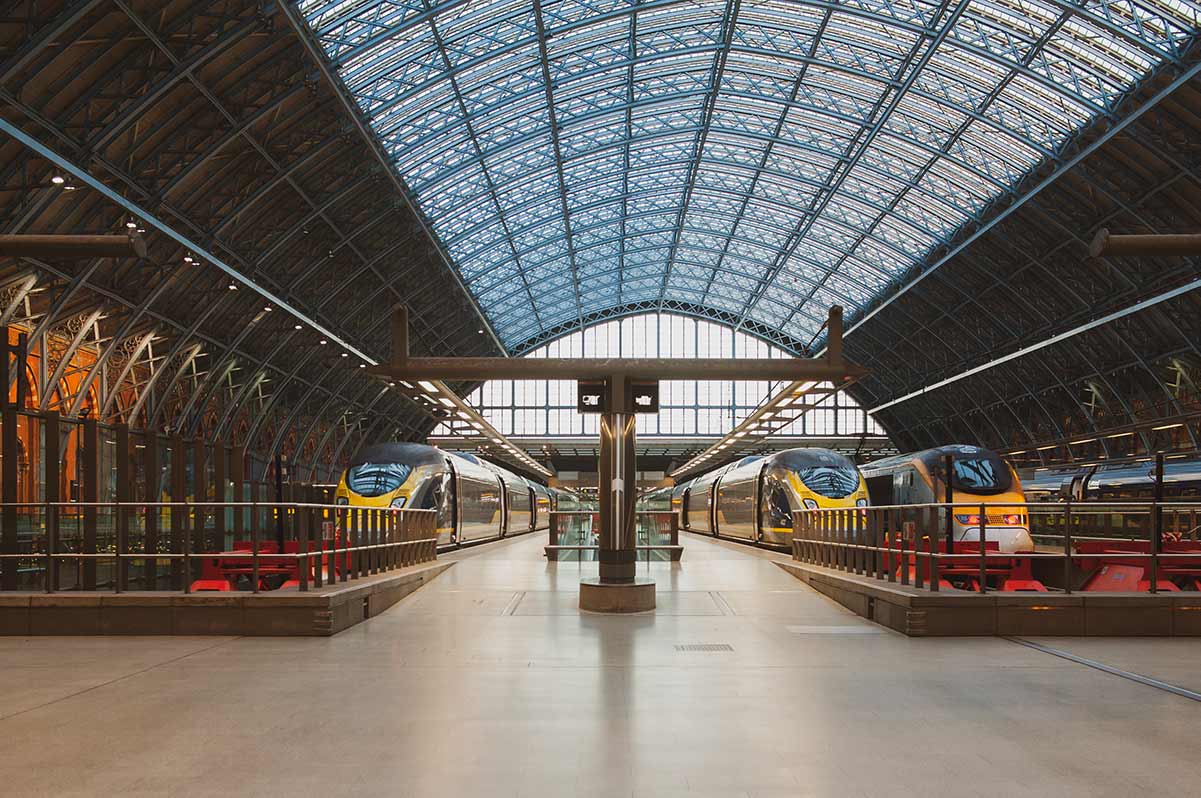




A platform for growth: Plans to double number of passengers at St. Pancras move a step closer
London St. Pancras Highspeed and Eurostar move forward with next stage of St. Pancras International capacity expansion. Hawkins\Brown appointed to develop station redesign as programme to transform international passenger facilities moves to its next phase
London St. Pancras Highspeed and Eurostar have agreed to move forward with the next stage of plans to significantly increase international passenger capacity at St. Pancras International and enhance the customer experience, following the completion of the initial design phase of the St. Pancras Enhancement Programme (StEP).
Leading architecture practice Hawkins\Brown has been selected to continue its work on the programme and develop the preferred design, building on its initial work exploring options for the station. This work has demonstrated viable options for substantially increasing international passenger capacity at St. Pancras.
The St. Pancras Enhancement Programme is designed to ensure the station can accommodate the next generation of international rail growth, supporting both Eurostar’s ambitions to expand its services and routes and the introduction of new international operators.
The programme will transform the international areas of the station, making better use of the existing footprint and improving the passenger journey from arrival at St. Pancras through security and border controls to boarding trains. Earlier design work has examined how changes to the ground-floor departures area, alongside operational improvements, can deliver a significant increase in passenger throughput without the need for major structural changes to the historic station.
The ambition is to approximately double St. Pancras International’s passenger processing capability, ultimately enabling around 5,000 international passengers per hour to move through the station by 2029. The wider programme is being delivered in phases, combining improvements to operational processes with a major redesign of the international zone and longer-term opportunities to increase capacity further.
The next design phase will allow the project team to develop the preferred design in greater detail, further develop delivery and construction plans and continue preparations for the investment required to deliver the enhancement.
Richard Thorp, Chief Operating Officer at London St. Pancras Highspeed, said:
“Moving into the next design phase is another important milestone in our plans to transform St. Pancras International and prepare the station for the next chapter of international rail.
“Working with Eurostar and Hawkins\Brown, we have shown that there is a clear route to significantly increasing the number of international passengers the station can accommodate, while improving the experience for people travelling through it.
“Our ambition is to create the capacity for around 5,000 international passengers an hour, helping existing services to grow and creating the conditions for new operators and destinations to come to St. Pancras. This is about ensuring that our iconic station is ready to meet growing demand for international rail and fulfil its potential as the UK’s gateway to Europe.”
Simon Lejeune, Chief Safety and Stations Officer, said:
“Our investment in new trains and plans for direct services to Frankfurt and Geneva will open up more opportunities to travel by rail. Growing capacity at St. Pancras is essential to turning those ambitions into reality.
“Working with London St. Pancras Highspeed, we want to make the journey through the station smoother, from security and border checks to boarding. Moving to the next stage of design brings us closer to welcoming more passengers and giving them a better start to their journey to Europe.”
Andrew Davies, Partner and Transport Sector Lead at Hawkins\Brown Architects, said:
“We are delighted to continue supporting London St Pancras Highspeed and Eurostar taking our concept design into the next phase of the project. A tremendous amount of effort from all parties involved has got us into this position. The much-needed improvements to passenger experience at St Pancras International is one step closer to a reality.”
The programme complements London St. Pancras Highspeed’s wider work to enable growth on the UK’s international high-speed rail network. Previous work has established that a combination of station redesign and operational change could provide substantially greater capacity for international passengers.
Notes to editors
The Royal Institute of British Architects (RIBA) Plan of Work sets out the stages of a building project. Stage 2, known as Concept Design, explores the main design options. Stage 3, known as Spatial Coordination, develops the preferred design and coordinates how its different elements fit together. StEP has completed Stage 2 and is now moving into Stage 3.