

A guide to Germany’s 16 states: where to go and what to see
Discover Germany’s 16 federal states, from vibrant cities and historic towns to scenic landscapes and festive Christmas markets. Explore the best things to see and do, find inspiration for your next trip and plan your journey from London by train.
Germany’s 16 states: where to go and what to see
Germany is made up of 16 federal states, each with its own character, landscapes and experiences to discover. From historic cities and cultural landmarks to coastal escapes, rolling countryside and festive Christmas markets, there are plenty of places to visit in Germany to suit different interests and travel styles. This guide explores all 16 German states, highlighting what makes each one special and helping you decide where to go, what to see and how to plan your trip. Whether you’re looking for a city break, outdoor adventure or a taste of local culture, you’ll find inspiration to help shape your itinerary.
Planning a festive getaway? Explore our weekend and Christmas guides to Cologne, Düsseldorf and Frankfurt for inspiration for your next winter city break.

Germany’s states at a glance
Germany is divided into 16 federal states, known in as Germany’s 16 Länder. Each has its own regional identity, traditions and attractions, from the maritime landscapes of the north to the mountains and lakes of the south. The German states map below shows how the country is divided, with each state offering a different starting point for exploring Germany.
It’s worth distinguishing the states from familiar travel regions. The Black Forest and Harz are geographical areas, the Rhine Valley is a landscape shaped by the river, and the Romantic Road is a tourist route. These regions and routes don’t always follow state boundaries, so you may discover several of them on the same trip. Three of Germany’s states are city-states: Berlin, Hamburg and Bremen. Bremen also includes the city of Bremerhaven, on the North Sea coast.
If you’re planning your first rail break from London, cities along the Rhine can be a practical starting point. For more distant destinations, coastal escapes or countryside itineraries, allow extra time for onward connections and exploring beyond the main cities.

The 16 states
- Baden-Württemberg
- Bavaria
- Berlin
- Brandenburg
- Bremen
- Hamburg
- Hesse
- Lower Saxony
- Mecklenburg-Western Pomerania
- North Rhine-Westphalia
- Rhineland-Palatinate
- Saarland
- Saxony
- Saxony-Anhalt
- Schleswig-Holstein
- Thuringia
Baden-Württemberg
In south-west Germany, Baden-Württemberg combines the storybook scenery of the Black Forest with historic towns, grand architecture and a strong automotive heritage. Explore Heidelberg’s Old Town and hilltop castle, wander through the forest’s walking trails and lakes, or head to Stuttgart for world-class motoring museums.
What to see and do
- The Black Forest – discover dense woodland, traditional villages, scenic hiking routes and lakes such as Titisee.
- Heidelberg – explore the historic Old Town and visit Heidelberg Castle, overlooking the Neckar River.
- Stuttgart – sisit the Mercedes-Benz Museum to trace the evolution of the automobile, or explore the city’s central squares and palaces.
- More to explore – Baden-Baden’s thermal spas, Freiburg’s Gothic cathedral and Europa-Park offer alternatives for different interests.
Helpful tip – If you’re staying in the Black Forest, ask your accommodation whether it participates in the KONUS guest card scheme. Eligible guests can use it for local public transport across participating areas, but it does not cover ICE or IC long-distance trains.
Getting there by rail – Travel from London via Paris, changing stations from Gare du Nord to Gare de l’Est for onward connections towards Stuttgart or Karlsruhe. Allow sufficient time for the transfer when planning your journey.
Christmas highlight – During Advent, Stuttgart’s Christmas market fills the city’s central squares with festive stalls and lights.
Bavaria
Bavaria, in south-east Germany, pairs lively cities and rich cultural traditions with Alpine scenery, lakes and fairytale castles. Munich is a natural starting point, with grand architecture, world-class museums and traditional Bavarian food, while Nuremberg offers a medieval Old Town and a castle overlooking its historic streets. Beyond the cities, the Bavarian Alps provide a dramatic backdrop for walking, mountain excursions and lakeside escapes.
What to see and do
- Munich – explore Marienplatz, browse the stalls at Viktualienmarkt and discover the city’s museums, including the BMW Museum.
- Nuremberg – wander the Old Town, visit Nuremberg Castle and discover the city’s history and culinary traditions.
- Neuschwanstein Castle – set against the foothills of the Alps, this famous castle makes a memorable excursion from Munich, although you’ll need to allow time for onward travel.
- The Bavarian Alps – visit Lake Eibsee or head towards Garmisch-Partenkirchen for mountain views and outdoor adventures.
Helpful tip – book Neuschwanstein Castle tickets through the official ticket shop in advance. Visits inside the castle are by guided tour at a fixed time, so plan your transport and arrival around your booking.
Getting there by rail – travel from London via Brussels and Frankfurt towards Nuremberg or Munich. If you’re planning to visit the Alps or castles, allow extra time for regional trains and local transport.
Christmas highlight – Nuremberg’s Christkindlesmarkt fills the historic Old Town with traditional crafts, festive decorations and regional treats during Advent.
Berlin
Berlin is both a city and a state, combining major historic landmarks with world-class museums, contemporary art and distinctive neighbourhoods. The Brandenburg Gate is one of Germany’s most recognisable sights, while Museum Island brings together several important museums in a UNESCO World Heritage Site. For a different perspective on the city’s history, visit the East Side Gallery, where a surviving section of the Berlin Wall has become an open-air gallery of colourful murals. Beyond the main attractions, neighbourhoods such as Kreuzberg and Prenzlauer Berg offer independent cafés, boutiques and a lively local atmosphere.
What to see and do
- Brandenburg Gate – admire one of Berlin’s most iconic landmarks and explore the surrounding Pariser Platz.
- Museum Island – discover Berlin’s renowned museum quarter, including the Neues Museum, home to significant archaeological collections.
- East Side Gallery – walk along a preserved stretch of the Berlin Wall decorated with murals by artists from around the world.
- Kreuzberg and Prenzlauer Berg – explore independent shops, cafés, food markets and neighbourhood streets to experience a different side of Berlin.
Helpful tip – book tickets for the Neues Museum online in advance, and check whether your chosen special exhibition requires an additional ticket. Museum Island’s attractions have individual opening arrangements, so check these before planning your visit.
Getting there by rail – travel from London via Brussels and Cologne towards Berlin, then use the city’s extensive public transport network to explore. Given the onward journey, consider staying for several nights to make the most of the city.
Christmas highlight – WeihnachtsZauber at Gendarmenmarkt combines traditional crafts, festive food and seasonal entertainment in a striking setting surrounded by historic architecture.

Brandenburg
Brandenburg surrounds Berlin with a quieter mix of historic towns, grand palaces, lakes and open countryside. For visitors looking for things to do in Potsdam, the state capital is a natural starting point, with the magnificent Sanssouci Palace and its landscaped gardens offering a glimpse into Prussia’s royal history. Beyond the city, the Spreewald is known for its winding waterways, traditional villages and peaceful natural scenery, making it ideal for boat trips and outdoor adventures. Families can also visit Tropical Islands Germany, a large indoor tropical resort with swimming pools, waterslides and sandy beaches.
What to see and do
- Potsdam – explore the historic centre, browse the shops and cafés of the Dutch Quarter, and discover the city’s palaces and gardens.
- Sanssouci Palace – visit this famous Brandenburg palace, built as the summer residence of Frederick the Great, and explore the surrounding park.
- The Spreewald – discover one of Germany’s most distinctive natural landscapes, with boat trips along its network of waterways, plus walking and cycling routes.
- Tropical Islands Germany – enjoy a family day out at this indoor tropical resort, with pools, waterslides and tropical-themed attractions.
Helpful tip – book a timed entry slot for Sanssouci Palace in advance, particularly during busy periods. If you want to visit other palaces in Potsdam, check their seasonal opening dates before travelling.
Getting there by rail – travel via Brussels and continue towards Berlin, which provides a convenient gateway to Brandenburg. From there, take regional trains to Potsdam or your chosen destination, checking onward connections before heading into more rural areas.
Christmas highlight – the Potsdam Christmas market (the Potsdamer Weihnachtszauber) brings festive stalls, seasonal food and decorations to the historic city centre.
Bremen
Bremen is a small but distinctive state in northern Germany, made up of two separate cities: Bremen and Bremerhaven. For visitors looking for things to do in Bremen, the historic city centre is a great place to start, with its impressive market square, UNESCO-listed Town Hall and Roland statue. Wander through the narrow lanes of the Schnoor quarter, one of the city’s oldest neighbourhoods, and discover the famous Bremen Town Musicians statue. Further north, the coastal city of Bremerhaven offers a different experience, with maritime museums, harbour attractions and the interactive Klimahaus, where visitors can explore different climate zones around the world.
What to see and do
- Bremen Market Square – admire the historic Town Hall and Roland statue, both part of Bremen’s UNESCO World Heritage ensemble, and visit the nearby cathedral.
- Schnoor – explore Bremen’s oldest neighbourhood, with its narrow lanes, independent shops, cafés and traditional houses.
- Bremen Town Musicians statue – see the famous bronze statue inspired by the Brothers Grimm fairytale, one of the city’s best-known landmarks.
- Bremerhaven – discover the city’s maritime heritage through its harbour attractions and museums, including the Klimahaus, an interactive experience exploring climate and life around the world.
Helpful tip – allow a separate day for Bremerhaven rather than trying to squeeze its attractions into a visit to Bremen. The two cities are around 60km apart, so factor in the onward train journey and time to explore.
Getting there by rail – travel from London via Brussels and Cologne towards Bremen. Bremerhaven requires a separate onward train connection from Bremen, so plan additional travel time if you want to visit both cities.
Christmas highlight – Bremen’s Christmas market fills the historic market square with festive stalls, traditional crafts and seasonal treats. For something a little different, the Schlachte-Zauber brings a maritime-inspired Christmas atmosphere to the Weser promenade, with wooden stalls, atmospheric lighting and festive food.
Hamburg
Hamburg is a vibrant city-state in northern Germany, known for its maritime heritage, impressive waterfront and lively cultural scene. For visitors looking for things to do in Hamburg, start with the historic Speicherstadt, with its red-brick warehouses and picturesque canals. Nearby, HafenCity is home to the striking Elbphilharmonie concert hall, one of the city’s most recognisable landmarks. Take a river cruise, explore independent shops and cafés, or discover the city’s famous harbour and nightlife.
What to see and do
- Speicherstadt – wander through the historic red-brick warehouses, bridges and canals of this UNESCO World Heritage Site, and discover its museums, cafés and waterfront views.
- Elbphilharmonie Hamburg – admire the city’s striking concert hall in HafenCity and head up to its public viewing plaza for panoramic views across the harbour.
- Miniatur Wunderland Hamburg – explore the world’s largest model railway exhibition, with incredibly detailed miniature landscapes and cities. A great indoor option for families.
- Hamburg Fish Market – experience one of the city’s best-known traditions, with market stalls, fresh produce and local food beside the harbour on Sunday mornings.
- Reeperbahn – discover Hamburg’s famous entertainment district, known for its live music venues, theatres, bars and nightlife.
- St Michael’s Church – visit one of Hamburg’s most recognisable landmarks and climb its tower for views across the city and port.
Helpful tip – a river cruise is a great way to experience Hamburg’s waterfront and see the harbour from a different perspective.
Getting there by rail – travel from London via Brussels and Cologne towards Hamburg.
Christmas highlight – Hamburg’s Christmas market at Rathausmarkt brings festive stalls, traditional crafts and seasonal food to the square beside the city’s impressive Town Hall.

Hesse
Hesse is a region of central Germany combining lively cities, historic architecture and scenic countryside. For visitors looking for things to do in Frankfurt, the state’s largest city offers an impressive skyline, a charming Old Town and renowned museums. Beyond Frankfurt, Wiesbaden is known for its elegant spa-town atmosphere, while Kassel offers grand parks and gardens.
What to see and do
- Frankfurt Old Town – explore Römerberg square, its traditional timber-framed buildings and historic cathedral.
- Main Tower – enjoy panoramic views across Frankfurt’s skyline and the River Main.
- Städel Museum – discover seven centuries of European art in one of Germany’s leading art museums.
- Wiesbaden – explore the historic spa town and nearby Rheingau wine region.
- Kassel – visit Wilhelmshöhe Park, a UNESCO World Heritage Site known for its grand gardens and Hercules monument.
Helpful tip – the Städel Museum is normally open Tuesday to Sunday and closed on Mondays. Check opening times and book tickets ahead of your visit.
Getting there by rail – travel from London to Brussels by Eurostar, then take a direct ICE train to Frankfurt am Main. From there, connect to other destinations across Hesse.
Christmas highlight – Frankfurt’s Christmas market brings festive stalls, crafts and seasonal food to the historic city centre, with Römerberg providing a particularly picturesque setting.
Lower Saxony
Stretching from the North Sea coast to the Harz Mountains, Lower Saxony offers historic towns, countryside escapes and lively cities. For visitors looking for things to do in Hannover, the state capital is a great starting point, with its impressive Herrenhausen Gardens and cultural attractions. Further afield, Celle is known for its beautiful half-timbered houses, while Goslar combines a historic Old Town with a scenic Harz Mountain setting.
What to see and do
- Hannover – explore the city centre and visit Herrenhausen Gardens, known for their grand Baroque design and landscaped grounds.
- Celle – wander streets lined with traditional half-timbered houses and discover the town’s historic castle.
- Goslar – explore the UNESCO-listed Old Town, with its medieval buildings and charming market square.
Helpful tip – check the Herrenhausen Gardens’ fountain timetable before visiting. The Great Garden’s water displays generally run from April to October.
Getting there by rail – travel from London via Brussels and Cologne to Hannover, a useful gateway for onward journeys to Celle and other inland destinations.
Christmas highlight – Hannover’s Christmas markets bring festive stalls and seasonal food to the Old Town, while Goslar offers a particularly atmospheric setting, with its traditional Christmas market and illuminated Christmas Forest.
Mecklenburg-Western Pomerania
Mecklenburg-Western Pomerania is known for its beautiful Baltic coastline, historic seaside towns and peaceful lake districts. For visitors looking to visit Mecklenburg-Vorpommern, Schwerin Castle is a standout attraction, set on an island surrounded by lakes and landscaped gardens. Further north, Rostock offers maritime heritage and access to the seaside resort of Warnemünde, while the island of Rügen is famous for its white chalk cliffs and Jasmund National Park.
What to see and do
- Schwerin Castle – explore this fairytale-style palace, surrounded by water and beautiful gardens.
- Rostock and Warnemünde – discover Rostock’s historic centre before heading to the nearby seaside resort for beaches and waterfront cafés.
- Rügen – visit Germany’s largest island, known for its sandy beaches, traditional seaside resorts and dramatic coastal scenery.
- Jasmund National Park – walk through ancient beech forests and admire the famous white chalk cliffs from the Königsstuhl viewpoint.
Helpful tip – reach the Königsstuhl National Park Centre by bus from Sassnitz station. Check return times before setting off to explore the park.
Getting there by rail – travel from London via Brussels and continue through Hamburg or Berlin towards Schwerin, Rostock or Stralsund. Allow extra time for regional connections and onward travel to coastal destinations.
Christmas highlight – Rostock’s Christmas market brings festive stalls, traditional crafts and seasonal food to the historic city centre, offering a different atmosphere from the region’s coastal escapes.

North Rhine-Westphalia
North Rhine-Westphalia is one of Germany’s most diverse regions, combining historic cities, cultural attractions and lively riverside destinations. For visitors looking for things to do in Cologne, the city’s magnificent cathedral is a must-see, while nearby Düsseldorf offers a different atmosphere, with its historic Old Town, shopping streets and vibrant dining scene. Further afield, Aachen is known for its impressive cathedral and rich history.
What to see and do
- Cologne Cathedral – admire this UNESCO-listed Gothic landmark and climb its tower for views across the city.
- Düsseldorf Old Town – explore traditional breweries, independent shops and riverside restaurants, or head to the Rhine Tower for panoramic views.
- Aachen – discover the city’s historic cathedral, one of Europe’s most important medieval buildings.
- Essen Zollverein – explore this former coal mine and UNESCO World Heritage Site, celebrating the region’s industrial heritage.
Helpful tip – check Cologne Cathedral’s visitor information before arriving, as sightseeing visits and access for worship have different arrangements.
Getting there by rail – take the Eurostar from London to Brussels, then connect to a continental Eurostar service to Cologne or Düsseldorf. Both cities are well connected for onward regional travel.
Christmas highlight – Cologne and Düsseldorf are particularly popular during Advent, with distinctive Christmas markets set against historic landmarks and riverside backdrops. Explore our Cologne weekend and Christmas markets guide and Düsseldorf weekend and Christmas markets guide for more inspiration and practical advice.
Rhineland-Palatinate
Rhineland-Palatinate is known for its historic cities, vineyard-covered hills and picturesque Rhine and Moselle valleys. For visitors looking for things to do in Koblenz, the city offers a scenic starting point where the two rivers meet. Further south, Mainz combines a charming Old Town with an impressive cathedral, while Trier is famous for its remarkably preserved Roman landmarks.
What to see and do
- Koblenz – visit Deutsches Eck, where the Rhine and Moselle rivers meet, and take in the views from Ehrenbreitstein Fortress.
- Mainz Cathedral – explore this impressive Romanesque landmark and wander through Mainz’s historic streets and riverside areas.
- Trier – discover the city’s Roman heritage, including the famous Porta Nigra and Imperial Baths.
- Eltz Castle – visit one of Germany’s most picturesque castles, set among the forests and hills of the Moselle region.
Helpful tip – check seasonal opening calendars before planning winter visits to castles or river cruises, as availability can be limited outside the main tourist season.
Getting there by rail – travel from London via Brussels and Cologne, then continue towards Koblenz or Mainz. If visiting Trier or Kaiserslautern, compare alternative connections via Paris.
Christmas highlight – Mainz’s Christmas market fills the historic squares around the Cathedral of St Martin with festive stalls, traditional crafts and seasonal treats during Advent.
Saarland
Saarland, in south-west Germany, combines historic city life, scenic countryside and fascinating industrial heritage. For visitors looking for things to do in Saarbrücken, the state capital offers elegant architecture, lively squares and a relaxed café culture. Beyond the city, the Saarschleife is a spectacular bend in the River Saar, while Völklinger Hütte offers a fascinating insight into the region’s industrial past.
What to see and do
- Saarbrücken – explore the historic Old Town, visit Ludwigskirche and enjoy the cafés and restaurants around St Johanner Markt.
- Saarschleife – admire the dramatic river loop from the Baumwipfelpfad treetop walkway and its panoramic viewing platform.
- Völklinger Hütte – discover this UNESCO World Heritage Site, a former ironworks showcasing the region’s industrial history.
Helpful tip – plan the Saarschleife as a separate day trip from Saarbrücken, allowing plenty of daylight to enjoy the viewpoint and surrounding walking routes.
Getting there by rail – travel from London via Paris, transferring between Gare du Nord and Gare de l’Est before continuing by ICE or TGV to Saarbrücken.
Christmas highlight – Saarbrücken’s Christmas market brings festive stalls, seasonal food and sparkling lights to St Johanner Markt and the surrounding city centre.

Saxony
Saxony combines historic cities, a strong cultural scene and some of Germany’s most striking landscapes. For visitors looking for things to do in Dresden, the city’s famous Frauenkirche is a must-see, while Leipzig offers a lively mix of music, history and creative culture. Beyond the cities, Saxon Switzerland provides a dramatic contrast, with sandstone cliffs, forest trails and spectacular viewpoints.
What to see and do
- Dresden Frauenkirche – admire the city’s iconic domed church, rebuilt after its destruction during the Second World War.
- Leipzig – explore the city’s musical heritage at St Thomas Church, where Johann Sebastian Bach worked, and discover its independent shops, galleries and cafés.
- Bastei Bridge – take in the panoramic views across Saxon Switzerland from this famous sandstone rock formation.
- Zwinger Palace – visit Dresden’s impressive Baroque complex, home to museums and art collections.
Helpful tip – allow a separate half or full day for Saxon Switzerland’s viewpoints and walking routes. The Bastei is a countryside excursion, not a central Dresden attraction, so factor in travel time.
Getting there by rail – travel from London via Brussels and Frankfurt towards Leipzig or Dresden. Regional trains provide onward connections to Saxon Switzerland and other countryside destinations.
Christmas highlight – discover the Dresden Christmas markets, including the historic Striezelmarkt, known for its traditional stalls and festive atmosphere. Saxony’s wooden Christmas decorations, many made in the Ore Mountains around Seiffen, add to the region’s distinctive festive identity.
Saxony-Anhalt
Saxony-Anhalt is known for its medieval towns, historic landmarks and important cultural heritage. For visitors looking for things to do in Magdeburg, the striking cathedral is a natural starting point, while Quedlinburg’s cobbled streets and half-timbered buildings offer a glimpse of Germany’s past. Further south, Dessau is home to the Bauhaus buildings, making the state an appealing destination for history, architecture and culture.
What to see and do
- Magdeburg Cathedral – explore one of Germany’s most significant Gothic cathedrals, set in the heart of the city.
- Quedlinburg – wander the UNESCO-listed Old Town, with its historic market square and more than 2,000 half-timbered houses.
- Wernigerode Castle – visit this hilltop castle overlooking the colourful town, with views across the Harz Mountains.
- Dessau – discover the Bauhaus buildings and learn about the design movement that helped shape modern architecture.
Helpful tip – decide whether you want to explore the Harz towns or follow an architecture-focused route, then choose one base. Distances between destinations can make it difficult to fit everything into a short stay.
Getting there by rail – travel from London via Brussels and either Hannover towards Magdeburg or central Germany towards Halle. Check onward regional connections to your chosen town, particularly for Harz destinations.
Christmas highlight – Quedlinburg’s Advent celebrations bring a festive atmosphere to the historic Old Town, with a Christmas market and special courtyard openings on selected weekends. Check the dates before planning your visit.
Schleswig-Holstein
Schleswig-Holstein sits between the North Sea and Baltic Sea, offering a mix of historic coastal towns, maritime cities and island escapes. If you’re planning to visit Schleswig-Holstein, start with Lübeck’s UNESCO-listed Old Town and famous Holstentor gate, explore Kiel’s waterfront or head further north to the beaches and landscapes of Sylt. Each offers a different way to experience the region’s coastal character.
What to see and do
- Lübeck – wander the Old Town’s narrow streets, admire the Holstentor and discover the city’s historic merchant houses.
- Kiel – explore the waterfront, watch the boats in the harbour and enjoy the city’s maritime atmosphere.
- Sylt – escape to this North Sea island for long sandy beaches, dunes and coastal villages.
- Flensburg – visit the harbour and historic Old Town, close to the Danish border.
Helpful tip – you can travel directly to Westerland on Sylt by passenger train. The railway embankment connects the island to the mainland, so there’s no need to take a ferry. Allow extra time if you’re planning an island stay rather than a day trip.
Getting there by rail – travel from London via Brussels and Cologne or Frankfurt towards Hamburg, then connect to Kiel or Lübeck. For Sylt, continue by train to Westerland.
Christmas highlight – Lübeck’s Christmas markets fill the historic centre with festive stalls and seasonal treats. Look out for the separate craft markets, and check individual opening dates as they vary across the city.

Thuringia
Thuringia combines historic towns, literary heritage and beautiful countryside in central Germany. If you’re planning to visit Thuringia, start in Erfurt, where the cathedral and Krämerbrücke define the medieval city centre. Weimar offers a rich cultural history shaped by writers such as Goethe, while Eisenach is home to Wartburg Castle. Beyond the towns, the Thuringian Forest is ideal for walking and outdoor escapes.
What to see and do
- Erfurt – explore the cathedral square and cross the Krämerbrücke, a medieval bridge lined with independent shops and houses.
- Weimar – discover the city’s literary heritage at the Goethe National Museum and explore its historic streets.
- Wartburg Castle – visit this hilltop castle near Eisenach, where Martin Luther translated the New Testament into German.
- Thuringian Forest – enjoy woodland trails, scenic viewpoints and outdoor activities in one of Germany’s best-known forest regions.
Helpful tip – Wartburg’s courtyards are free to visit, but exploring the castle interiors requires an admission ticket. Check opening information before travelling, particularly if visiting during announced restoration works.
Getting there by rail – travel from London via Brussels and Frankfurt to Erfurt. From there, use regional trains to reach Weimar and Eisenach, or connect to your chosen base in the Thuringian Forest.
Christmas highlight – Erfurt’s Christmas market fills Domplatz, beneath the cathedral and St Severi Church, with traditional crafts, festive decorations and Thuringian food.
Getting to Germany from the UK
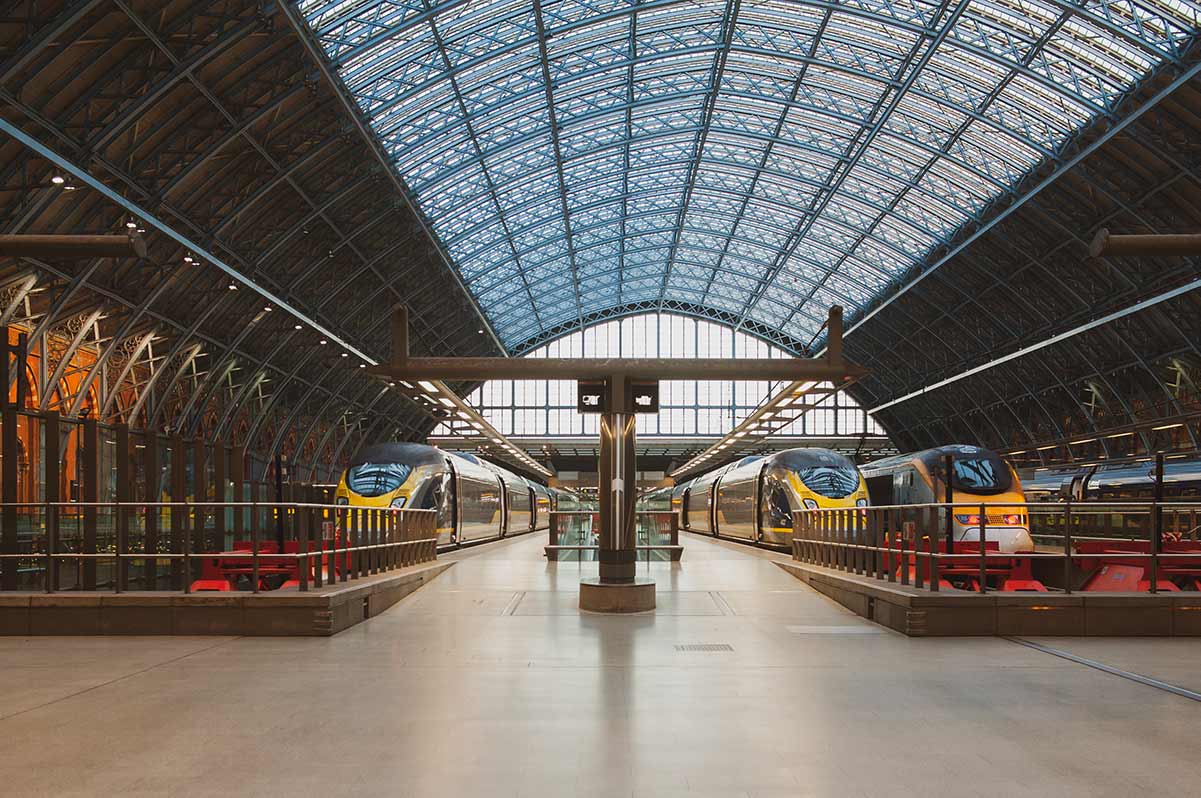
Travelling from London to Germany by train starts at St Pancras International, where Eurostar services depart for mainland Europe. There’s no direct Eurostar service to Germany, so you’ll need to change trains on the continent before continuing your journey.
Via Brussels is a useful option for many destinations. Take a Eurostar from London to Brussels-Midi/Zuid, then connect to a continental Eurostar service towards Cologne or Düsseldorf, or an ICE train towards Cologne and Frankfurt. There are also direct ICE services between Brussels and Frankfurt.
Via Paris is worth considering for Saarland and parts of south-west Germany. Take a Eurostar from London to Paris Gare du Nord, then transfer across the city to Paris Gare de l’Est for onward ICE or TGV services.
Once in Germany, long-distance and regional trains connect major cities with smaller towns and rural destinations. Depending on where you’re going, you may need a final connection by local train, bus or ferry.
When booking your Eurostar to Germany, check your complete outward and return journeys, the operators’ latest station-arrival guidance and the time needed between connections.
If you’re travelling over the festive season, you could also plan your journey around a visit to the famous Christmas tree at St. Pancras International before departure.

Where to stay with Hilton
From city-centre hotels close to major attractions to convenient bases for exploring further afield, Hilton has properties across several German states. If you’re planning a trip by rail, some are particularly well placed for station access, while others offer a useful base for discovering the surrounding region.
Here are some options to consider when planning your stay:
| City and state | Hilton hotel | Location highlight |
|---|---|---|
| Freiburg, Baden-Württemberg | Hampton by Hilton Freiburg | In the Güterbahnhof district, with local transport to the Old Town. |
| Munich, Bavaria | Hampton by Hilton Munich City Center East | Berg am Laim, near the S-Bahn for connections into central Munich. |
| Nuremberg, Bavaria | Hampton by Hilton Nuremberg City Centre | A short walk from Nuremberg Central Station. |
| Berlin, Berlin | Hilton Berlin | In Mitte, beside Gendarmenmarkt and close to central sights. |
| Frankfurt, Hesse | Hampton by Hilton Frankfurt City Centre East | Beside Ostbahnhof, with connections to the city centre. |
| Celle, Lower Saxony | Hampton by Hilton Celle | Near the French Gardens and within walking distance of the Old Town. |
| Hannover, Lower Saxony | DoubleTree by Hilton Hannover Schweizerhof | Around 500 metres from Hannover Central Station. |
| Cologne, North Rhine-Westphalia | Hilton Cologne | Close to the central station, Cathedral and Old Town. |
| Cologne, North Rhine-Westphalia | Wasserturm Hotel Cologne, Curio Collection by Hilton | A boutique hotel housed in Europe’s former tallest 19th-century cylindrical water tower. |
| Kaiserslautern, Rhineland-Palatinate | Hampton by Hilton Kaiserslautern | Near the exhibition centre, providing a base for exploring the Palatinate. |
| Mainz, Rhineland-Palatinate | Hilton Mainz | Riverside location close to the Old Town. |
| Dresden, Saxony | Hampton by Hilton Dresden City Centre | Near Old Town sights including the Frauenkirche and Zwinger. |
| Kiel, Schleswig-Holstein | Hampton by Hilton Kiel | Central location beside Merkur Ostseehalle, convenient for exploring the city. |

FAQs
How many states does Germany have?
Germany has 16 federal states, known in German as Bundesländer or Länder. Each has its own identity, cities and attractions, from Bavaria in the south to Schleswig-Holstein in the north. Explore our complete guide to Germany’s 16 federal states, including the map and individual state profiles.
Are German regions the same as federal states?
No. Germany’s federal states are official administrative areas, while regions can describe landscapes, cultural areas or broader travel destinations that cross state borders. For example, the Harz Mountains span parts of Lower Saxony, Saxony-Anhalt and Thuringia. A destination or touring route may therefore take you through more than one federal state.
Which German states are useful starting points for a trip from London by train?
North Rhine-Westphalia, home to Cologne and Düsseldorf, and Hesse, where you’ll find Frankfurt, are useful starting points thanks to their available rail connections from Brussels. The best choice depends on what you’d like to see, your travel dates and how many days you have. You can find more details in our guide to travelling from the UK to Germany.
Can I travel directly from London to Germany on Eurostar?
There is currently no direct Eurostar service from London to Germany, so you’ll need to change trains on the continent. Travelling via Brussels offers connections towards cities including Cologne, Düsseldorf and Frankfurt. Some routes via Paris can also work, particularly for south-west Germany, with a transfer between Gare du Nord and Gare de l’Est.
Where should I start when choosing a German Christmas break?
Cologne, Düsseldorf and Frankfurt are useful starting points, each with its own festive markets and seasonal attractions. Explore our Cologne, Düsseldorf and Frankfurt guides for more ideas and itinerary inspiration. Christmas markets take place across Germany, so you’ll find plenty of other destinations to consider. Check individual opening dates before booking, as many markets close before Christmas Day.